
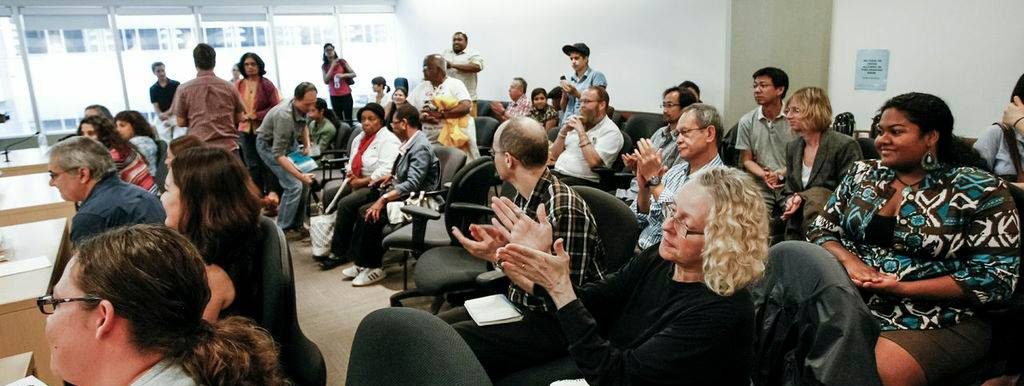
2025: ‘Radical Resistance in the Penumbra of the Law: Legal Mobilization for Migrant Farmworkers under Neo-colonial Racial Capitalism’ by Prof. V. Venkatesh
Radical Resistance in the Penumbra of the Law: Legal Mobilization for Migrant Farmworkers under Neo-colonial Racial Capitalism
Workers from the Global South with temporary immigration status provide a transitory, cheap, exploitable workforce that is responsive to economic vicissitudes and supremacist anti-migration discourse. They are created as an exceptional category of persons “essential” for their work but with no right to remain and claim citizenship-type entitlement to the Global North. The programs in agriculture are rooted in the legacies of indentureship, plantation, and other forms of racialized coerced labour. These programs continue to entrench a neocolonial racial capitalist global order where “unfree labour” is sanctified by contemporary liberal laws. Caught in the vice of a hegemonic, racial, state-governed project, migrant farmworkers are caught in what Best and Hartman call a “negative relation to law”—marked by “the necessity of legal remedy” but “the impossibility of redress.” Scholars within the Black radical tradition have configured fugitivity, or the practice of refusal, as a form of liberatory resistance that subverts the politics of recognition. The concept of fugitivity has been used in recent scholarship on illegalized crossings of securitized borders; but fugitive resistance is not meant to be seen in the registers of the established scripts of liberal resistance, such as legal claims. Using empirical evidence from migrant worker organizing in Canada, this paper suggests the possibility of radical legal mobilization that centres a praxis of refusal. This approach uses the law not for statist benevolence but as a counter-pedagogy for challenging neocolonial, racial capitalist sites and reframing the movement of marginalized, racialized persons. Such a legal mobilization enables and supports ‘fugitive’ actions of migrant workers––agentic choices by workers that reject, refuse, and escape the system that creates racialized unfreedoms. I show that radical legal mobilization can be conceptualized to involve three modalities of praxis (subversive legality, relationship-building, and radical knowledge production) that map to the three themes of performance, sociality, and futurity/imagination found in Fred Moten’s work.
digitalcommons.osgoode.yorku.ca
2024: ‘Drastic need for improvement for migrant worker laws’ by T. Doma
Drastic need for improvement for migrant worker laws | Taneeta Doma – Law360 Canada
In the summer, many Canadians will sit by the pool to stay cool or heat up the barbeque and enjoy their time with loved ones. At the same time, migrant workers across the country will be working in 30-plus degree weather in the fields or greenhouses, where there may be no shade for their entire shift — all to provide for their loved ones, whom they may see once a year if that.
2023: ‘Pushing climate refugees into migrant worker programs’ by Prof. C. Ramsaroop
Pushing climate refugees into migrant worker programs
In 2017, wildfires in B.C. captured headlines around the world. Canadians from coast to coast donated generously to those whose homes and businesses were impacted. But there were some agricultural workers whose precarity rendered them nearly invisible, even as they continued to labour in the heat and the smoke. Andrea,* a former blueberry worker who was employed under the Seasonal Agricultural Worker Program during the disaster, vividly remembers what it was like to work during the fires.
briarpatchmagazine.com
2023: ‘Migrant farmworkers: Resisting and organising before, during and after COVID-19’ by Prof. V. Venkatesh et al.
Migrant farmworkers: Resisting and organising before, during and after COVID‐19
Abstract: Migrant farmworkers are a ubiquitous but invisibilised, expropriated and exploited component of the global agricultural economy. Their conditions took centre-stage during the COVID-19 pandemic. Fear of production disruption in the migrant labour-intensive sectors led to foreign workers being deemed ‘essential’ in many countries, and exceptional procedures and regulations were instituted that further increased their exploitation, illnesses and deaths. However, the pandemic has not merely exposed the long-established structures of racialised exploitation and expropriation in the domain of farm work. Although it exacerbated the precariousness of the living and working conditions defining the reality of migrant farm workers, there is evidence that the pandemic also strengthened farmworkers’ individual and collective consciousness, along with forms of organisation and resistance. The symposium ‘Migrant Farmworkers: Resisting and Organizing before, during and after COVID-19’ explores two dimensions reflected in migrant farmworkers’ realities during the pandemic. First, the contributions look at the general conditions defining power structures and material outcomes within the political economy of agriculture before and during the pandemic. Second, they explore the conditions under which resistance and solidarity emerged to question established structures of exploitation.
doi.org
2023: ‘Discipline and resistance in southwestern Ontario: Securitization of migrant workers and their acts of defiance’ by Prof. C. Ramsaroop
Discipline and resistance in southwestern Ontario: Securitization of migrant workers and their acts of defiance
Abstract: COVID-19 has had deep impacts on a wide range of vulnerable communities in Canada. Migrant agricultural workers in the southwestern region of Ontario were particularly impacted. Fearing the threat of the ‘racialized foreign other’, the Canadian state produced myriad securitization responses with heightened surveillance. This paper will examine both state and non-state forms of securitization and the response from both workers and activists such as the advocacy group Justicia for Migrant Workers (J4MW). While there has been ample discussion of how vulnerable migrant agricultural workers were affected during the pandemic, there has been less attention paid to how state policies have heightened and targeted specific groups such as migrant agricultural workers through modes of securitization. Central to this was to ensure that labour needs would be met to ensure the viability of Canada’s multi-billion agricultural industry. This paper shows how securitization and control were vital to ensure no disruptions to production levels and Canada’s role as a leading agricultural export producer.
onlinelibrary.wiley.com
2023: ‘In community with farmworkers’ by The Law Foundation of Ontario
In community with farmworkers – The Law Foundation of Ontario
Seeking legal help can be a risky proposition for Ontario’s almost 30,000 migrant farmworkers. They come to Canada through an employer driven system with little choice as to where they live and work, and can face reprisal for voicing concerns.
Canada’s first Migrant Farmworkers Clinic is helping these workers exercise their rights. The clinic is a partnership of the University of Windsor, Faculty of Law and Justicia for Migrant Workers. Through a unique combination of legal services and community organizing, the clinic offers summary advice and representation, referrals and case support, public legal education, student training, and advocacy and outreach with farmworkers in Essex County. It started as a pilot project supported by a Responsive grant from The Law Foundation of Ontario in 2019. Now it receives funding through the Foundation’s law schools grants.
Canada’s first Migrant Farmworkers Clinic is helping these workers exercise their rights. The clinic is a partnership of the University of Windsor, Faculty of Law and Justicia for Migrant Workers. Through a unique combination of legal services and community organizing, the clinic offers summary advice and representation, referrals and case support, public legal education, student training, and advocacy and outreach with farmworkers in Essex County. It started as a pilot project supported by a Responsive grant from The Law Foundation of Ontario in 2019. Now it receives funding through the Foundation’s law schools grants.
lawfoundation.on.ca
2021: ‘Migrant Workers Need Priority Access to the COVID-19 Vaccine’ by Fay Faraday et al.
Migrant Workers Need Priority Access to the COVID-19 Vaccine
Last year, in the first COVID-19 wave, 12% of migrant agricultural workers in Ontario were infected with the virus after arriving in Canada, and three men died. Migrant agricultural workers’ incidence of infection exceeded other high risk occupational categories like front line health care workers. But as the 2021 agricultural season quickly approaches, Canada still has no plan to ensure these essential workers receive priority, free and safe access to the COVID-19 vaccine.
rsc-src.ca
2019: ‘Confronting myths: agricultural citizenship and temporary foreign worker programs’ by Prof. V. Venkatesh

Confronting myths: agricultural citizenship and temporary foreign worker programs | Vasanthi Venkatesh | International Journal of Migration and Border Studies (IJMBS), Vol. 5, No. 1/2, 2019
Abstract: This paper provides a conceptual intervention through an analysis of the myths surrounding agricultural citizenship and migrant work that underlie the temporary foreign worker program in two settler countries: Canada and Israel. The paper offers a brief insight into the ideologies around farm work that informed the colonisation and dispossession of Indigenous peoples and the expropriation of non-citizen labour. It begins with a historical overview of how agriculture was used as a tool of colonisation even as settlers struggled to cultivate Canadian lands because of the seasonal nature and the persistent lack of labour. From the time of Confederation, agriculture began to be intimately tied with immigration policies culminating in the Seasonal Agricultural Worker Program (SAWP) that persists to this day. The paper then expands the analysis to Israel to show how other settler nations have also followed similar ideological and policy trajectories. The paper illustrates how racial capitalism intertwines with settler colonial practices discursively and institutionally through immigration policies.
doi.org
2019: ‘The hell with abolishing or reforming Canada’s guest workers programs: developing a migrant-centred approach to migration’ by Prof. C. Ramsaroop
2018: ‘Rethinking the Temporary, Reconstituting the Citizen: Rights Mobilization by Temporary Foreign Workers in Comparative Perspective’ by Prof. Venkatesh
Rethinking the Temporary, Reconstituting the Citizen: Rights Mobilization by Temporary Foreign Workers in Comparative Perspective
Workers with temporary immigration status have become the economic reality in several countries, as these workers provide a temporally mobile, cheap workforce that is responsive to economic vicissitudes and anti-immigration sentiment. Temporary foreign workers (TFWs) in low-wage sectors such as agriculture are tied to a single employer, have no access to their family and to permanent residence, and face overwhelming barriers in accessing justice. TFWs spend years residing and working outside of their country of nationality and are unable to be self-sovereign agents either in their countries of origin (because of lack of residence) or in their countries of sojourn (because of lack of nationality). While there have been instances where TFWs were able to make individual legal claims for labor violations in the country of sojourn, collective mobilization against the TFW program itself is exceptional. Collective mobilization represents acting as (partial) citizens, as the claims resemble self-determination claims on behalf of the entire TFW collectivity. How do TFWs and their allies, against all odds, mobilize the law to make collective claims and produce citizenship from below?
In this research, I critically examine Israel and Canada, countries that have very similar TFW programs in agriculture but represent two contrasting types of legal mobilization against these programs. Israel is a case of “top-down” constitutional litigation where the results were court-ordered changes to the TFW program. Canada represents a case of legal mobilization “from below” where law is used subversively as a tool for larger political action. What explains the different pathways to legal mobilization in Israel and Canada?
In addition to contributing new empirical data and theoretical conceptualizations of the different ways in which the law can be mobilized, my dissertation combines legal mobilization and social movement theories to offer an analytical framework to understand what affects the type of legal mobilization. TFW mobilization is situated in two broad social movements, labor movements and migrant rights/citizenship movements. I frame legal mobilization in the TFW context as a form of anti-hegemonic, contentious collective action and show the complex interactions between the political and discursive environment (political opportunity structure), the legal environment, and the support structure for mobilization (resource organizations).
I show that despite barriers to access and courts’ unwillingness to overturn immigration law, the law can be collectively mobilized on behalf of TFWs. The pathways to legal mobilization depend on legal opportunities and type of resource support. Constitutional litigation is initiated by cause-driven lawyers or legal organizations, but their framing of issues is constrained. Grassroots, solidarity organizations, in contrast, use the law as a tool for the broader goals of worker mobilization and social change. With the support of such organizations, TFWs are able to articulate their demands collectively, engage in direct action and political mobilization, and demand changes to the TFW program. My comparative historical analysis of Israel and Canada shows that legal and discursive strategies, however, depend on the historical political legacies and current political and economic environments. Elite power and ideological discourses are entrenched and distributed in the context of TFW programs. Political contestation impacts constitutional challenges as well as grassroots mobilization.
My dissertation further adds to citizenship theory in three ways. First, it disrupts prevalent myths about the agency of TFWs and their lack of rights consciousness. Second, it offers the possibilities for meaningful change to TFW programs and advances an agentic theory on access to citizenship. Lastly, it adds grist to the conception of “citizenship from below” through the evidence of jurisgenerative practices of TFWs.
In this research, I critically examine Israel and Canada, countries that have very similar TFW programs in agriculture but represent two contrasting types of legal mobilization against these programs. Israel is a case of “top-down” constitutional litigation where the results were court-ordered changes to the TFW program. Canada represents a case of legal mobilization “from below” where law is used subversively as a tool for larger political action. What explains the different pathways to legal mobilization in Israel and Canada?
In addition to contributing new empirical data and theoretical conceptualizations of the different ways in which the law can be mobilized, my dissertation combines legal mobilization and social movement theories to offer an analytical framework to understand what affects the type of legal mobilization. TFW mobilization is situated in two broad social movements, labor movements and migrant rights/citizenship movements. I frame legal mobilization in the TFW context as a form of anti-hegemonic, contentious collective action and show the complex interactions between the political and discursive environment (political opportunity structure), the legal environment, and the support structure for mobilization (resource organizations).
I show that despite barriers to access and courts’ unwillingness to overturn immigration law, the law can be collectively mobilized on behalf of TFWs. The pathways to legal mobilization depend on legal opportunities and type of resource support. Constitutional litigation is initiated by cause-driven lawyers or legal organizations, but their framing of issues is constrained. Grassroots, solidarity organizations, in contrast, use the law as a tool for the broader goals of worker mobilization and social change. With the support of such organizations, TFWs are able to articulate their demands collectively, engage in direct action and political mobilization, and demand changes to the TFW program. My comparative historical analysis of Israel and Canada shows that legal and discursive strategies, however, depend on the historical political legacies and current political and economic environments. Elite power and ideological discourses are entrenched and distributed in the context of TFW programs. Political contestation impacts constitutional challenges as well as grassroots mobilization.
My dissertation further adds to citizenship theory in three ways. First, it disrupts prevalent myths about the agency of TFWs and their lack of rights consciousness. Second, it offers the possibilities for meaningful change to TFW programs and advances an agentic theory on access to citizenship. Lastly, it adds grist to the conception of “citizenship from below” through the evidence of jurisgenerative practices of TFWs.
escholarship.org
2017: ‘Bad Medicine: A report on the WSIB’s transformation of its health care spending’ by Antony Singleton and IAVGO Community Legal Clinic
Bad Medicine: A report on the WSIB’s transformation of its health care spending
Our report describes the effect that the WSIB’s transformation has had on health care benefits by analysing the WSIB’s own data in the context of the changes it made to its business model and the experience of injured workers.
The evidence we present supports three stark conclusions:
1. There has been a significant cut in prescription drug benefits that affects thousands of injured workers per year.
2. Health care spending has progressively shifted away from services whose sole focus is patient welfare, and towards services that are structured to drive down the cost of benefits paid to injured workers.
3. The primary measures the WSIB uses as evidence of improved health outcomes – the reduction in the incidence and severity of permanent impairments – are the result
of changes to the WSIB’s adjudication practices. They constitute a cut in benefits themselves, rather than a reflection of improved health care.
The evidence we present supports three stark conclusions:
1. There has been a significant cut in prescription drug benefits that affects thousands of injured workers per year.
2. Health care spending has progressively shifted away from services whose sole focus is patient welfare, and towards services that are structured to drive down the cost of benefits paid to injured workers.
3. The primary measures the WSIB uses as evidence of improved health outcomes – the reduction in the incidence and severity of permanent impairments – are the result
of changes to the WSIB’s adjudication practices. They constitute a cut in benefits themselves, rather than a reflection of improved health care.
static1.squarespace.com
Reports – Food Chain Workers Alliance

Reports – Food Chain Workers Alliance
Read reports by the Food Chain Workers Alliance including “Procuring Food Justice: Grassroots Solutions for Reclaiming our Supply Chains,” “No Piece of the Pie,” and more.
foodchainworkers.org

Food Workers for Climate Justice – Food Chain Workers Alliance
FCWA members have articulated this Food Worker Climate Justice Declaration to guide our movement building and organizing.
foodchainworkers.org

Food Chain Workers in 2025: Labor and Exploitation in the Food System – Food Chain Workers Alliance
FCWA’s new report has data on wages, injuries, and living and working conditions for food chain workers in the United States in 2025.
foodchainworkers.org

2024 Bi-National People’s Tribunal on the Struggles of Farmworkers in North America – Food Chain Workers Alliance
Read FCWA’s report on their 2024 Bi-National People’s Tribunal on the Struggles of Farmworkers in North America
foodchainworkers.org

Procuring Food Justice: Grassroots Solutions for Reclaiming our Supply Chains – Food Chain Workers Alliance
FCWA & HEAL Food Alliance
Published in 2023
Published in 2023
foodchainworkers.org

We Are Not Disposable: Food Workers Organizing on the COVID Frontlines – Food Chain Workers Alliance
The Food Chain Workers Alliance launched the report “WE ARE NOT DISPOSABLE: Food Workers Organizing on the COVID Frontlines.” The report documents the devastating and disproportionate impacts of COVID-19 on food workers, especially for Black and Latinx workers, and exposes how the pandemic exacerbated long-standing problems for workers in the food sector. It features interviews about and analysis of trends on how workers across the country are organizing in response to the crisis, from launching strikes and walkouts to protesting unsafe conditions, filing lawsuits against mega corporations, fighting for legal protections, demanding hazard pay and excluded worker funds, and forming new unions and worker organizations to build worker power. The report outlines trends in worker experiences at each step of the food chain and across industries–from farms to processing plants, warehouses, restaurants, retail storefronts, and more. Food workers have been on the frontlines of the COVID-19 pandemic, continuing to provide essential services as cases surged.
foodchainworkers.org

